|
Design Awards |
|
-
Material World
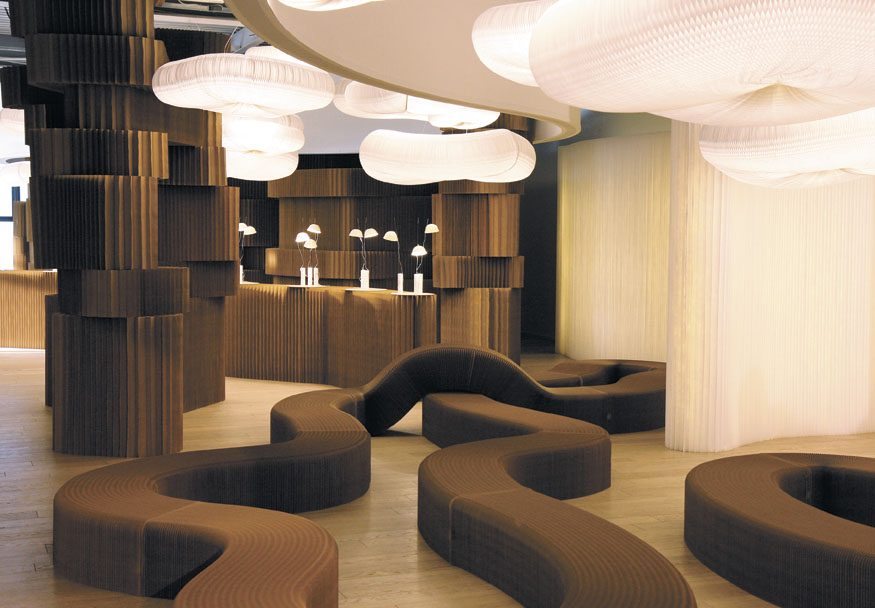
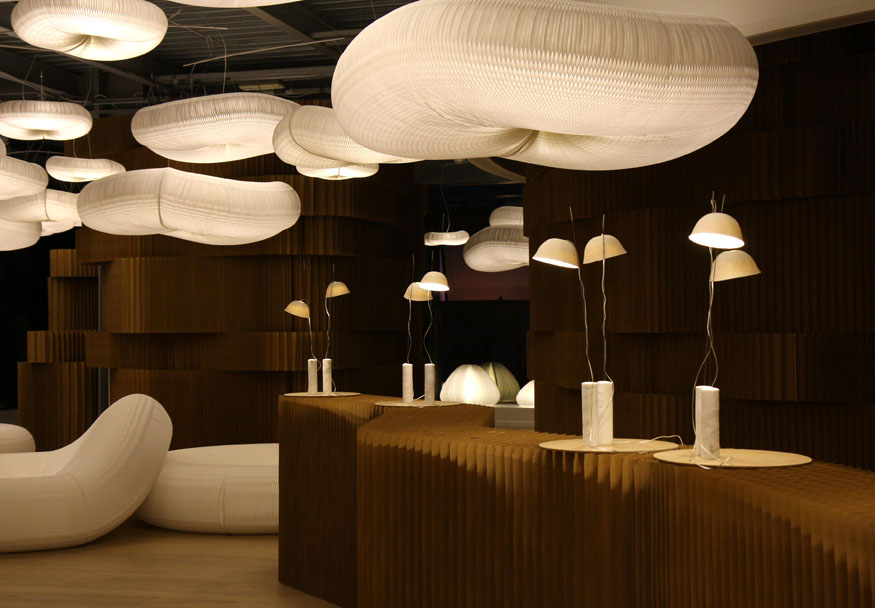
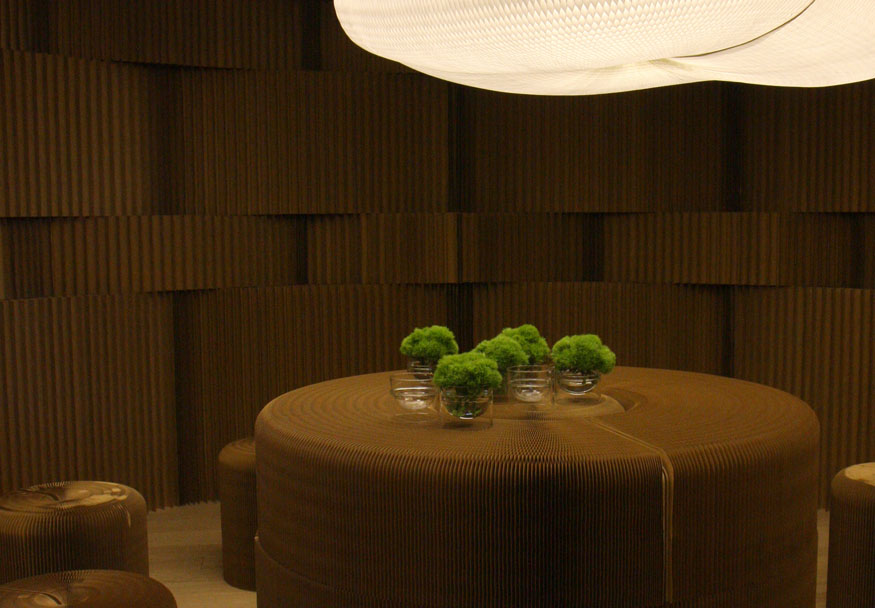
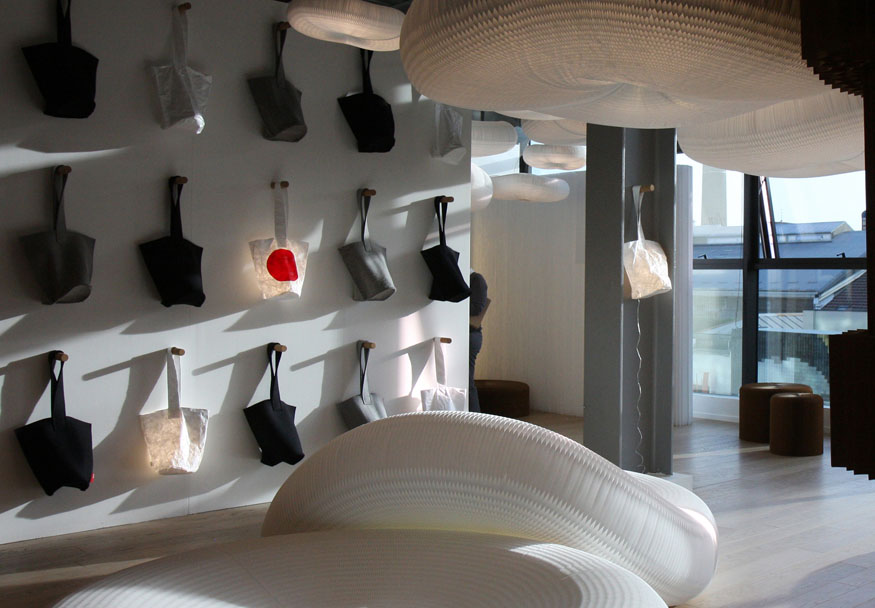
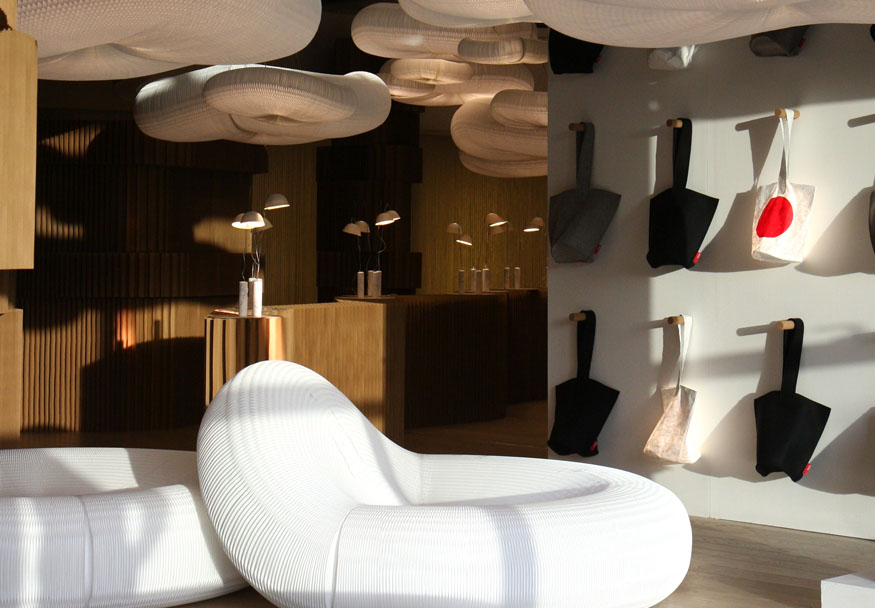
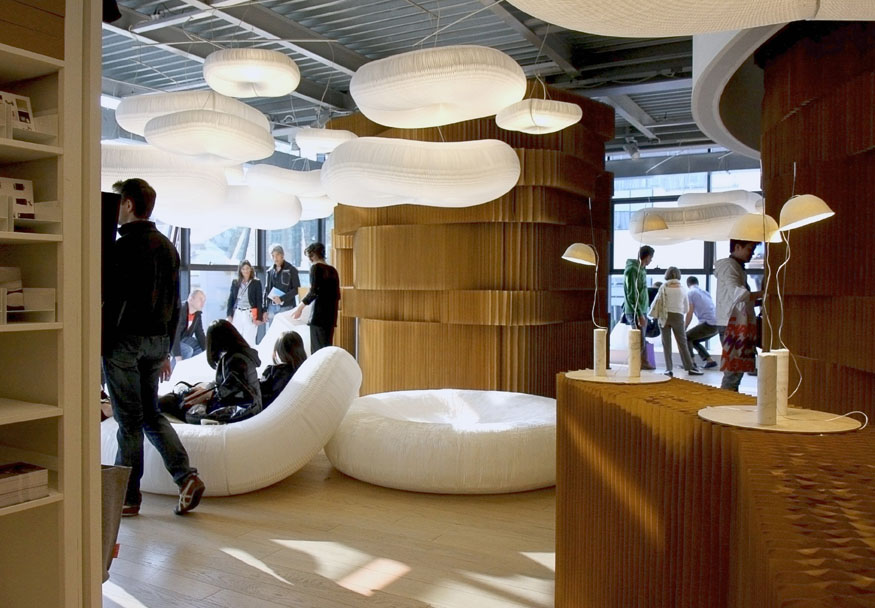
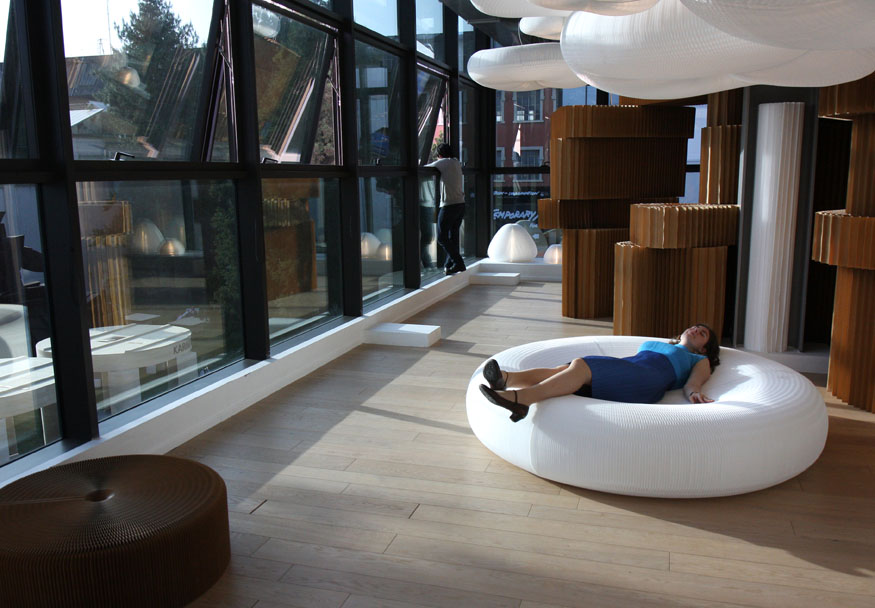
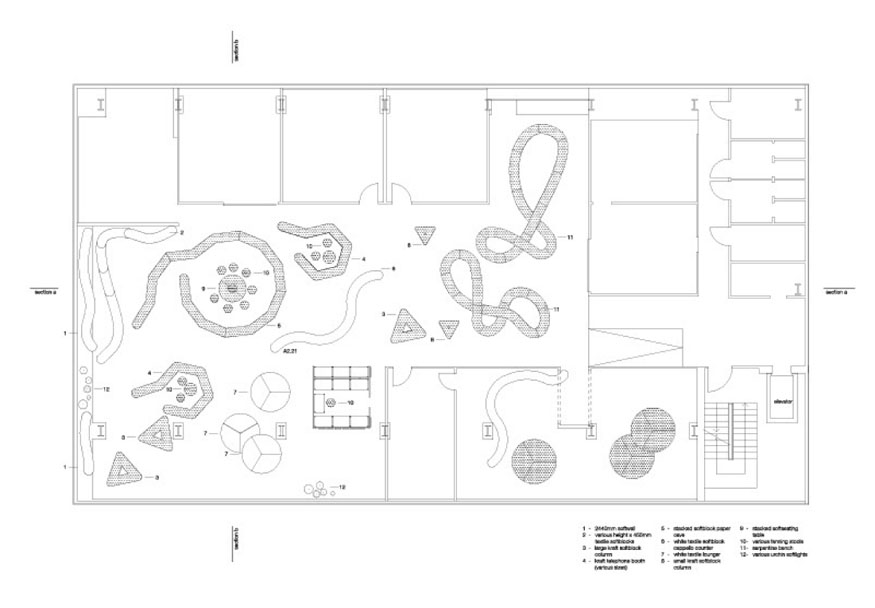
Every element of Molo Design Ltd.'s 45-by-80-foot exhibit was made of the company's own paper-based products, with Softblocks and Softwalls used to delineate various areas. But building with paper isn't without its challenges – some of the walls reached 12 feet, the weight of which would have crushed the Softblocks at the base. So Molo developed more durable blocks made of heavyweight kraft paper, and used them to form the foundation. photos: Molo Design Ltd.
Wall Paper
By Lena Valenty
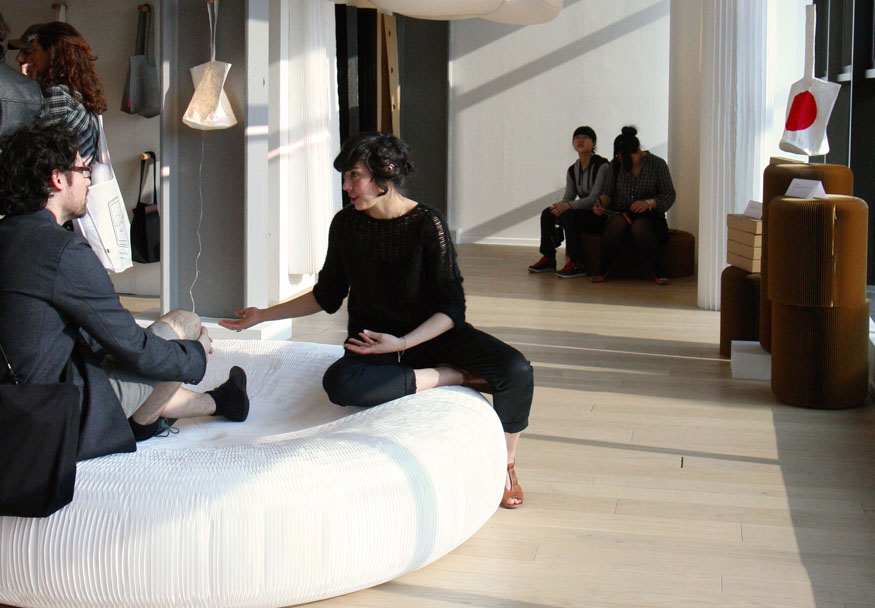
 raft paper, used to make everything from cardboard boxes to food packaging, typically doesn't get a fair shake. Often tossed aside after their contents are harvested, kraft-paper vessels usually end up in the recycling bin. That lack of respect can be a problem for a company like Molo Design Ltd., which makes everything from couches to lighting using paper products. So when it came time for Milan Design Week, Molo wanted to showcase the beauty and durability of its paper furniture. raft paper, used to make everything from cardboard boxes to food packaging, typically doesn't get a fair shake. Often tossed aside after their contents are harvested, kraft-paper vessels usually end up in the recycling bin. That lack of respect can be a problem for a company like Molo Design Ltd., which makes everything from couches to lighting using paper products. So when it came time for Milan Design Week, Molo wanted to showcase the beauty and durability of its paper furniture. "We had a wide-open space and decided to create several smaller, unique areas within that space," said Todd MacAllen, design director at Molo. "These areas were defined by undulating walls made entirely from our modular Softwall and Softblock system." Comprising brown kraft paper treated with a nontoxic fire retardant, the walls reached heights of 12 feet, and formed geomorphic spaces that attendees couldn't resist. The installation also featured Molo's white, cloud-like paper Softlights, which seemed to hover in the air with no regard for gravity. MacAllen created several mobiles that each contained three LED-powered white Softlights and suspended them from the ceiling. The bulbous fixtures illuminated the spaces with a warm, enveloping glow. Robust paper "loungers" – round, low-profile white Softseating – mirrored the Softlights overhead. A reception desk, occasional tables, stools, and accent pieces, all made of Molo's paper products, also littered the space. "You've got one material that acts as a wall, desk, chair, bench, lounge, and ceiling element," one Exhibit Design Awards judge said. "Talk about multifunctional." While the unusual building blocks were certainly functional, they also coalesced into a beautiful, cohesive exhibit that coaxed attendees inside for further exploration. Now that's thinking outside the kraft-paper box. E |


Marketplace

- Audiovisual Equipment
- Convention Centers
- Event Design and Production
- Exhibit Fabrication
- Exhibit Producers
- Exhibit Rental
- Experiential Agency
- Flooring
- Graphics
- International Exhibit Producers
- Kiosks
- Lead Retrieval
- Modular Exhibit Systems
- Portable Display Systems
- Shipping and Transportation
- All Companies
3048R Sales and Marketing Alignment: How to Get ‑ and Stay ‑ on the Same Page
Feb. 10, 2026
3011R How to Grow Your Brand: Incorporating Brand Marketing into Your Exhibit Program
Feb. 19, 2026
4101R Boost Up: Promote Yourself from Service Provider to Strategic Business Partner
Mar. 3, 2026
6020R The @show Experience: Understand the Essentials of Exhibit Design
Mar. 10, 2026
7058R Authors Executive Series: Thrive Under Deadlines: Strategies for Success
All Sessions >>