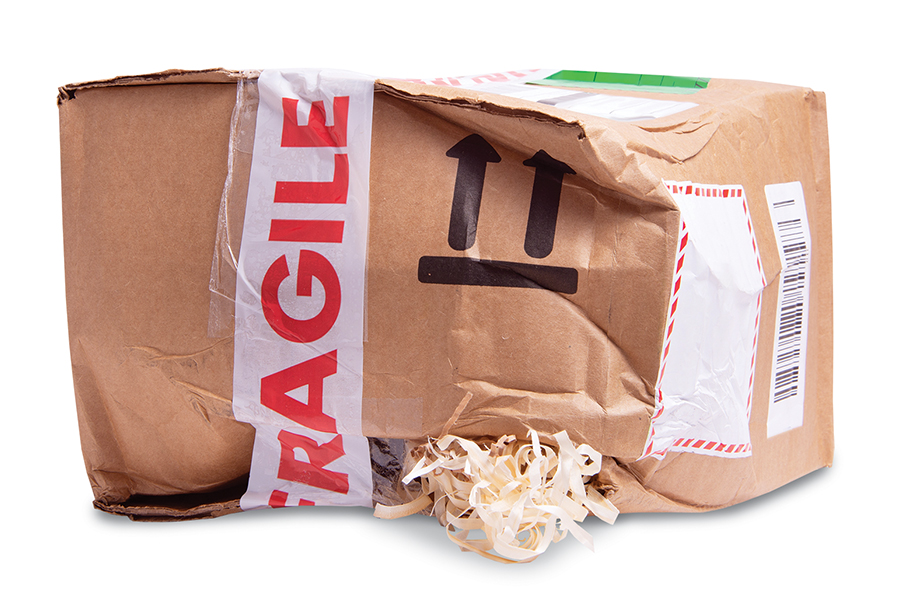
 Vet your shipping carrier. Your trade show carrier is
responsible for the safety
of your exhibit when it's
in transit, so hire a company with a
trade-show-specific division used
to handling valuable and sometimes
delicate display pieces. These
companies understand the unique
requirements that are associated with
transporting goods to conventions,
right down to the differences between
advance warehouse and direct-to-show
options. They also understand pickup
and delivery schedules, driver check-in
times, and the marshalling yard.
Vet your shipping carrier. Your trade show carrier is
responsible for the safety
of your exhibit when it's
in transit, so hire a company with a
trade-show-specific division used
to handling valuable and sometimes
delicate display pieces. These
companies understand the unique
requirements that are associated with
transporting goods to conventions,
right down to the differences between
advance warehouse and direct-to-show
options. They also understand pickup
and delivery schedules, driver check-in
times, and the marshalling yard. Crate your materials. Crates often cost upward
of $1,500, which seems
pricey unless you consider
the price-per-use. If you purchase a
$100,000 exhibit that travels four times
and your crate costs $2,000, you are
paying $500 per shipment to protect
$100,000 worth of assets. Over time,
a crate will require some repairs here
and there because of damage and
transit wear, but that's better than the
goods inside being damaged.
Crate your materials. Crates often cost upward
of $1,500, which seems
pricey unless you consider
the price-per-use. If you purchase a
$100,000 exhibit that travels four times
and your crate costs $2,000, you are
paying $500 per shipment to protect
$100,000 worth of assets. Over time,
a crate will require some repairs here
and there because of damage and
transit wear, but that's better than the
goods inside being damaged. Insure your properties. Most shows will require a
Certificate of Insurance
(COI). But the COI does not cover what happens to your
freight while it is being transported.
Inland marine insurance covers products,
materials, and equipment when
it's either being transported over
land or temporarily warehoused by a
third party. This applies to anything
transported by a trade show carrier
from an exhibit house to a show site
or advanced warehouse. You should
speak with your insurance carrier
about the intricacies and coverage,
but this policy will protect you in case
there are any major accidents. Keep
in mind that your exhibit partner will
not insure your properties. Anything
you own requires your own coverage.
Insure your properties. Most shows will require a
Certificate of Insurance
(COI). But the COI does not cover what happens to your
freight while it is being transported.
Inland marine insurance covers products,
materials, and equipment when
it's either being transported over
land or temporarily warehoused by a
third party. This applies to anything
transported by a trade show carrier
from an exhibit house to a show site
or advanced warehouse. You should
speak with your insurance carrier
about the intricacies and coverage,
but this policy will protect you in case
there are any major accidents. Keep
in mind that your exhibit partner will
not insure your properties. Anything
you own requires your own coverage. Protect your graphics. Bring to your show enough
large plastic bags for each
one of your graphics. Pack
an extra box of bags for dismantle,
and be sure that your crew puts the
fabric graphics — folded outside
in — in labeled bags. Graphics are
replaceable, but the longer you can
keep them clean, the better. I also
recommend packing white gloves and
asking your crew to use them to install
and remove your graphics from the
exhibits. If you don't have gloves, ask
your crew to wash their hands well
before they start the graphic portion
of the installation.
Protect your graphics. Bring to your show enough
large plastic bags for each
one of your graphics. Pack
an extra box of bags for dismantle,
and be sure that your crew puts the
fabric graphics — folded outside
in — in labeled bags. Graphics are
replaceable, but the longer you can
keep them clean, the better. I also
recommend packing white gloves and
asking your crew to use them to install
and remove your graphics from the
exhibits. If you don't have gloves, ask
your crew to wash their hands well
before they start the graphic portion
of the installation.
Many graphics can be machine
washed or dry cleaned. But a quick
and easy fix is to use a Magic Eraser,
which will often take off light scuff
marks with ease.
 Pull and prep for exhibit
inspection. Your exhibit house partner
will likely include an
estimate for pull and prep for exhibit
inspection in your exhibit quote. This
means that they will fully build your
exhibit in advance of the show, check
everything out to make sure that it's in
good shape, pack it up to make sure nothing is left behind, and ship it to
the show. They also will offer this on
the outbound from the show to make
sure that everything gets back to
the warehouse in one piece. Be sure
to add “catching things that need to
be repaired before the next show” to
your inspection process. For example,
let's say that the countertop was
damaged during a show. When your
booth is prepped, the warehouse
crew can identify and fix the damage.
Pull and prep for exhibit
inspection. Your exhibit house partner
will likely include an
estimate for pull and prep for exhibit
inspection in your exhibit quote. This
means that they will fully build your
exhibit in advance of the show, check
everything out to make sure that it's in
good shape, pack it up to make sure nothing is left behind, and ship it to
the show. They also will offer this on
the outbound from the show to make
sure that everything gets back to
the warehouse in one piece. Be sure
to add “catching things that need to
be repaired before the next show” to
your inspection process. For example,
let's say that the countertop was
damaged during a show. When your
booth is prepped, the warehouse
crew can identify and fix the damage.
 Consolidate materials. The fewer random pieces
that you ship to a show,
the better. If you have a
solid packing plan, you will not only
save money on material handling, but
you will protect your assets. I also recommend
putting AirTags inside each
of your crates so that you can track
them from point A to point B. Even
worse than damage is losing pieces
of freight, which, unfortunately, does occasionally happen. Document
your pieces and their measurements
in a spreadsheet. If something goes
missing you will be able to present
documentation to the general service
contractor (GSC) so they can help
you find your freight or file a claim.
Also photograph your freight between
shipments so you can present photos
in case of damage.
Consolidate materials. The fewer random pieces
that you ship to a show,
the better. If you have a
solid packing plan, you will not only
save money on material handling, but
you will protect your assets. I also recommend
putting AirTags inside each
of your crates so that you can track
them from point A to point B. Even
worse than damage is losing pieces
of freight, which, unfortunately, does occasionally happen. Document
your pieces and their measurements
in a spreadsheet. If something goes
missing you will be able to present
documentation to the general service
contractor (GSC) so they can help
you find your freight or file a claim.
Also photograph your freight between
shipments so you can present photos
in case of damage.
 Make sound decisions in
the first place. Although a lot of what I
have talked about here
should be implemented after you
make a purchase, there are some
things to consider before you make
your purchase. For example, a lot of
exhibit builders offer packing solutions
for portable exhibits, pop-up
exhibits, and backlit walls. Sometimes
carry bags, clamshell cases, and
fiber cases cost up to half of the cost
of the entire exhibit, but cramming exhibit properties back into their
original cardboard boxes could lead
to long-term damage. It's important
to consider that trade show exhibit
properties are not made for long-term
installations, but they are durable
enough to be put together and taken apart multiple times.
Make sound decisions in
the first place. Although a lot of what I
have talked about here
should be implemented after you
make a purchase, there are some
things to consider before you make
your purchase. For example, a lot of
exhibit builders offer packing solutions
for portable exhibits, pop-up
exhibits, and backlit walls. Sometimes
carry bags, clamshell cases, and
fiber cases cost up to half of the cost
of the entire exhibit, but cramming exhibit properties back into their
original cardboard boxes could lead
to long-term damage. It's important
to consider that trade show exhibit
properties are not made for long-term
installations, but they are durable
enough to be put together and taken apart multiple times.
Also think about whether custom
components make sense. The larger
the properties and the more space
they take up, the more difficult they are
to handle with forklifts. Oversized items
require special forklifts and special
care. Think this through when you are
designing your exhibit. My company
once had a client decide that they
wanted to build a custom cart out of
natural wood. The unit was gorgeous,
but the wood was soft and easily
dinged and dented. It was not crated
so it had to be transported on the back
of a truck with no protection around
it other than some bubble wrap and
shrink wrap. Needless to say, while the
cart had a pretty substantial impact on
the show floor, it did not last very long.
 Be prepared to replace
small components before,
during, and after shows. Part of your preparation
to maintain your exhibit properties
in between shows is to have extra
parts and components ready in case
of emergency. Inevitably, things are
going to break, crack, and bend. So
what can you do to be prepared?
Instead of thinking about fully replacing
exhibit properties, think about
what you can bring along so you
can replace a damaged component.
For example, let's say that you have
a backlit wall and the transformers
connecting the frames keep getting
lost or breaking. If you have a
toolbox with some extra pieces, you
can swap out the broken pieces for
new ones. Most reputable trade show
industry suppliers will offer replacement pieces and components for
larger systems. The same would go
for things like frame systems and feet
that go on the bottom of structures. If
you notice that the same items always
break, order several of them and have
them with you so that there's always
a Plan B and sometimes a Plan C in
place. This will help you maintain
the integrity of your system and
protect you if you forget about a
damaged or broken item before
you get to the next show floor.
Be prepared to replace
small components before,
during, and after shows. Part of your preparation
to maintain your exhibit properties
in between shows is to have extra
parts and components ready in case
of emergency. Inevitably, things are
going to break, crack, and bend. So
what can you do to be prepared?
Instead of thinking about fully replacing
exhibit properties, think about
what you can bring along so you
can replace a damaged component.
For example, let's say that you have
a backlit wall and the transformers
connecting the frames keep getting
lost or breaking. If you have a
toolbox with some extra pieces, you
can swap out the broken pieces for
new ones. Most reputable trade show
industry suppliers will offer replacement pieces and components for
larger systems. The same would go
for things like frame systems and feet
that go on the bottom of structures. If
you notice that the same items always
break, order several of them and have
them with you so that there's always
a Plan B and sometimes a Plan C in
place. This will help you maintain
the integrity of your system and
protect you if you forget about a
damaged or broken item before
you get to the next show floor.
 Work closely with your
shipping carrier. Communication
is everything! Make sure that your
shipping carrier knows not to stack
your crates on the back of the trucks.
Doing so can increase the risk of
damage, especially if the items are
fragile. Communicate with your carrier
about your preferences regarding
how your crates and packages should
be handled. Request that they use
proper handling procedures such as
air-lifted trucks, padded interiors, and
straps to prevent movement during
transit, and ask them to avoid stacking
heavy items on top of fragile ones.
Also, be sure to gather and share all
necessary paperwork, such as shipping
labels, customs forms (if applicable), and
trade show documentation, and make
sure it is complete and accurate. This
extra step will help to prevent delays and
misunderstandings, and it goes a long
way toward keeping items from being
lost in transit between shows.
Work closely with your
shipping carrier. Communication
is everything! Make sure that your
shipping carrier knows not to stack
your crates on the back of the trucks.
Doing so can increase the risk of
damage, especially if the items are
fragile. Communicate with your carrier
about your preferences regarding
how your crates and packages should
be handled. Request that they use
proper handling procedures such as
air-lifted trucks, padded interiors, and
straps to prevent movement during
transit, and ask them to avoid stacking
heavy items on top of fragile ones.
Also, be sure to gather and share all
necessary paperwork, such as shipping
labels, customs forms (if applicable), and
trade show documentation, and make
sure it is complete and accurate. This
extra step will help to prevent delays and
misunderstandings, and it goes a long
way toward keeping items from being
lost in transit between shows.
Trade show components are a big part of your company's marketing budget and purchasing new assets to replace broken or damaged ones will not always be a fiscally responsible option. Instead, if you do everything in your power to increase the longevity of your assets, you protect your budget — and your sanity — by preventing an emergency replacement situation. And the longer you can make your trade show components last, the easier it will be for you to make strategic decisions about exhibit properties you'll need down the line.E
 Betsy Earle, CTSM
managing director and founder of Event Driven Solutions LLC. Earle obtained her MBA at the University of Miami and earned her Diamond-level CTSM designation in 2018. [email protected]


