exhibiting 101 |
||
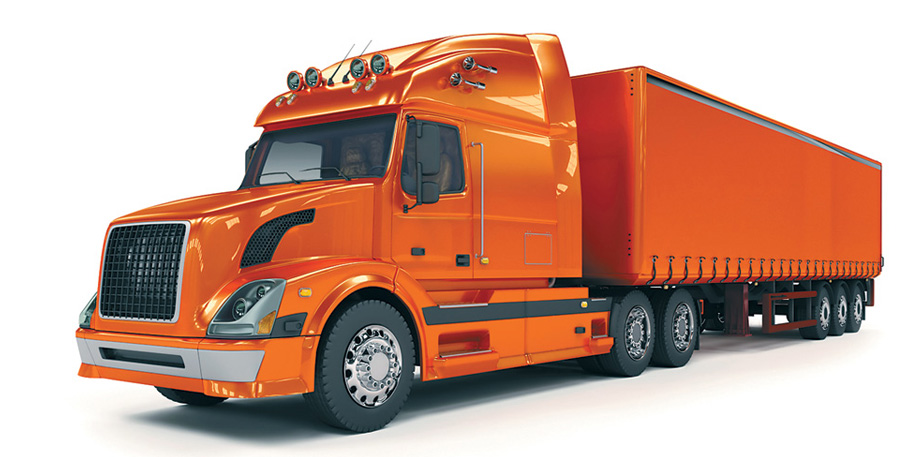 The Freight Escape
Not sure what forced freight is? Don't find out the hard way. This primer covers the basics of forced freight – including what to do if it happens to you. By Candy Adams
 any years ago, I learned about forced freight the hard way. I got a phone call from the general service contractor's (GSC) freight department three days after my first trade show had closed, telling me that my freight had been "forced." As a rookie exhibit manager, my reply was, "Forced to do what?" any years ago, I learned about forced freight the hard way. I got a phone call from the general service contractor's (GSC) freight department three days after my first trade show had closed, telling me that my freight had been "forced." As a rookie exhibit manager, my reply was, "Forced to do what?"
Fast-forward more than 20 years, and I now know more than I ever wanted to about forced freight. I can tell you what it is, why it occurs, and even how much it costs. To fully understand forced freight, you need a basic knowledge of the contractual agreements among the show manager, the convention center, and the GSC that make forced freight a necessary evil for trade show exhibitors. When a show manager signs a venue contract, it is agreeing to rent the premises for a finite period of time, say, Thursday, March 14, at 12 a.m. through Friday, March 22, at 11:59 p.m. The show manager agrees to relinquish the use of the facility at the end of the contract period in the same condition as it was received. This is important because another show may be moving in at 12 a.m. Saturday morning. The show manager generally hires a GSC to oversee the show floor, including all material handling. Part of the GSC's responsibility is to make sure that the venue is ready to turn over at the time stated in the show manager's contract with the facility. So, the GSC works with show management to set two times (both of which are listed in the show's exhibitor services manual): The time at which all carriers must have checked in at a marshaling yard, and the time at which all carriers must have the freight loaded after the show. Any freight remaining on the show floor after that designated time will be forced, or moved to another location. Communication is Key When I was a show manager, I was amazed at how many exhibitors just walked away from their freight at the end of a show, and how much was left behind after the last exhibitor-designated carrier departed from the docks. And miscommunication is usually the cause of the problem. Often, booth staffers think someone back at the office will take care of handling and outbound shipping after a show. And sometimes that person at the office believes the booth staffers or contracted installation-and-dismantle personnel are responsible for filling out the outbound paperwork and turning it in. If you ask the carrier why it didn't pick up the freight, it might claim that it wasn't given the correct check-in time or marshaling-yard location. Miscommunications also occur between the transportation carrier's dispatcher and the driver. On the other hand, if you ask the GSC what causes forced freight, it will probably tell you that exhibitors don't turn in the proper paperwork: the uniform material-handling form (aka material-handling agreement), which authorizes the GSC to move the freight from the booth to the exhibitor-designated carrier. Note that the uniform material-handling form is not the same as the bill of lading. The bill of lading is an agreement between the exhibitor and its transportation carrier that allows the carrier to load freight and ship it to the final destination. You must fill out both forms in order to have valid contracts with both vendors. Other causes include a designated carrier failing to arrive on time or at all. And although most GSCs won't admit it, exhibit freight is also forced because of the following:
 Inexperienced material-handling staffers who can't find the freight because they can't read floor plans.Misplaced copies of the exhibitor's material-handling agreement.Premature removal of the hanging aisle signs and booth numbers taped on the floor during teardown (before material-handling staff can locate and remove freight from the floor).An expedited move-out process to meet the venue's deadline. Inexperienced material-handling staffers who can't find the freight because they can't read floor plans.Misplaced copies of the exhibitor's material-handling agreement.Premature removal of the hanging aisle signs and booth numbers taped on the floor during teardown (before material-handling staff can locate and remove freight from the floor).An expedited move-out process to meet the venue's deadline.Even though the GSC uses additional resources (such as forklifts, material-handling and administrative staff, cartage trucks, warehouse space to house the forced freight until it can be rerouted, etc.) that all cost money, forced freight can be a lucrative revenue source. Often there is a profit-sharing agreement (called a loading-allowance payment) between the GSC and the official common carrier, which moves the show's forced freight at inflated rates. Forced Freight Isn't Free My favorite answer to any question about show costs is "it depends," since there are many factors to consider. So I'll start with that answer but give you some guidelines on the types of fees you could incur if your freight is forced. If you indicated on your material-handling form that you wanted your freight to be taken back to the warehouse should your carrier fail to show up, you may be charged: Off-target penalty fees. Some large trade shows now target both inbound and outbound shipments, with specified times for getting small, medium, and large exhibits off the trade show floor.Overtime outbound material-handling rates. If your exhibit freight is loaded after regular straight-time hours or on a weekend or holiday, you might be charged overtime material-handling rates.Local shipping fees. You may be charged to have your freight shipped from the show hall to the GSC's or official common carrier's warehouse. Material-handling fees. Additional charges are often incurred for freight sent to the warehouse, and could be charged on straight time or overtime. Handling and/or storage fees. Depending on how long it takes for the GSC to sort the forced freight, contact the exhibitor, and/or make arrangements for redirecting it, you may be charged additional fees by the GSC or its preferred carrier. If you checked the box on your material-handling form that indicated you wanted freight to be rerouted via the show's official common carrier, you could pay overtime outbound material-handling rates and higher shipping charges. Since the official common carrier may categorize the shipment as an on-site order, you could be charged double or triple the shipping costs you had negotiated with your preferred carrier before the show. These charges may also include costs to cover the revenue-sharing agreement between the GSC and official common carrier. What's more, depending on the policies of the official common carrier that ultimately ships your forced freight, you may need to prepay for the shipment and have all fees charged to your credit card before your freight is even loaded. You may also have to ship it cash on delivery (COD), which could be a problem if your company or exhibit house doesn't have a local accounts-payable department that can cut a check as soon as the carrier arrives at its destination. There could also be additional penalty fees charged by your designated transportation carrier if it arrives and your freight isn't there. These charges include:Wait-time fees. Your carrier may charge you for the time its driver spends waiting to pick up your freight. Note that your pre-show freight cost estimate may not include information on accessorial charges such as if, when, and how much you will be charged for wait time. Attempted/aborted pickup fees. If your carrier is turned away based on an incorrectly completed material-handling form, or if the GSC says that it can't find your freight to turn over to your carrier, your carrier may then charge you an "attempted/aborted pickup fee" plus wait-time fees. The last downside to forced freight may be the biggest: You might not have the exhibit back in time for the next show. When my freight was forced from a meeting room, it took almost three weeks for the GSC to locate it, let alone forward it. By the time it was finally located (the GSC had to sort through 42 trailers of freight that had been forced from that show), I missed the deadline to ship the exhibit to an international show. It's a hard pill to swallow, but paying the marked-up costs to use the show's official common carrier may work out in your favor in the long run. Sometimes you have to weigh the pros and cons of not having your exhibit when you'll next need it. Determine what the lost opportunity costs are if you did, indeed, miss the next show, or if you decided to rent another property and scurry to get it ready. At least if you use the show's official common carrier, you'll know who has your exhibit and won't have to wait for the GSC to sort through dozens of truckloads of freight hoping yours won't be in the nose of the last trailer it unloads. What to do When it Happens to You If you believe that your freight has been wrongfully forced, find out everything you can from your carrier, including when the driver checked in, what he or she was told, and by whom. Next, call any numbers you have for GSC staff, floor managers, the show manager, or your onsite dismantle rep, and ask for help reaching the show's freight supervisor and/or marshaling yard. Write down the names of the people you talked to, times at which you talked to them, and current status of your freight. Finally, find out if it's still possible to have your carrier load the freight. If the freight is already loaded on a trailer of forced freight, get the trailer number to help expedite locating and rerouting the shipment when it arrives at the GSC's warehouse. And while there isn't any one thing you can do to guarantee your freight won't be forced, simply understanding forced freight and why it happens puts you well ahead of the game.E
|
 Candy Adams, CTSM, CME, CEM, CMP, CMM,

Marketplace

- Audiovisual Equipment
- Convention Centers
- Event Design and Production
- Exhibit Fabrication
- Exhibit Producers
- Exhibit Rental
- Experiential Agency
- Flooring
- Graphics
- International Exhibit Producers
- Kiosks
- Lead Retrieval
- Modular Exhibit Systems
- Portable Display Systems
- Shipping and Transportation
- All Companies
3048R Sales and Marketing Alignment: How to Get ‑ and Stay ‑ on the Same Page
Feb. 10, 2026
3011R How to Grow Your Brand: Incorporating Brand Marketing into Your Exhibit Program
Feb. 19, 2026
4101R Boost Up: Promote Yourself from Service Provider to Strategic Business Partner
Mar. 3, 2026
6020R The @show Experience: Understand the Essentials of Exhibit Design
Mar. 10, 2026
7058R Authors Executive Series: Thrive Under Deadlines: Strategies for Success
All Sessions >>